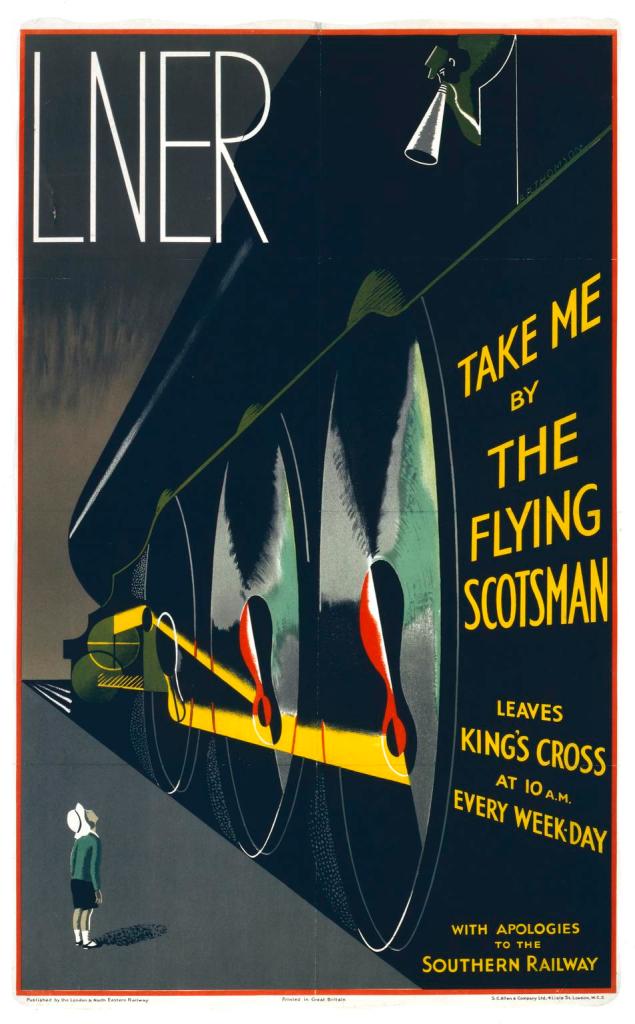
“Those who want fewest things are nearest to the gods.” ¹
——-
John Braithwaite sat by the fire in a big stuffed chair with a pipe. His gaze was firmly locked on the flames as I walked in. Thinking he hadn’t heard my footfalls, I coughed.
The old man’s eyes found mine.
“Oh hello Jeffries.”
I sat in a companion chair across from John, noticing for the first time a large envelope and papers in the hand not holding his pipe.
“Thank you for coming so late.”
“My aunt passed last week. This,” he waved the hand with the papers, “was in her safe.”
“I’m half of a mind to toss these into the fire. There was a time when the world wasn’t ready to hear this story. And now? Perhaps it doesn’t care anymore. But some people would. Innocent people, who might suffer the sins of their fathers. I will take you into confidence because quite frankly I don’t know what to do with these pages. So sit back for a spell and listen to a tale.”
——-

Percy grimaced in pain as he pulled his body up the steps. A wound from a boiler explosion had not yet healed, and he walked with a cane. As a senior engineer for the London North Eastern Railway (LNER), he had been working on upgrades for the new Pacific class trains when a prototype steam regulator had failed. Still in convalescence, he was a technical expert along for the ride today.
Agnes watched from onboard as Percy made his way down the platform and into a car. She had been early to the train and was taking note of the other passengers from an open window. Agnes—or Aggie, as friends called her—was a junior member of the LNER railway plainclothes constabulary. She was the only field agent in the office that morning when an exigent instruction came on the wire, detailing possible sabotage of the service. So she rushed to Waverley station.
And what of the train itself? The Flying Scotsman was a technical marvel that had been a highlight of the 1924/25 British Empire Exhibition in Wembley Park. With representation from 56 countries, the fair eventually drew 27 million visitors. One can imagine strolling through three massive palaces of art, industry, and engineering—where pride-of-place belonged to the very locomotive pulling the train today.
On the heels of the exhibition, LNER engineered a coal tender with transit corridor, which would allow crew swaps without climbing over the coal bunker or stopping for traditional embarkation at a station platform. As a result—for the first time—non-stop service between Edinburgh and London was possible.
But the years flew by, and by 1934 the railway was looking for a new way to stoke interest for their signature service. Thus came the idea to attempt a rail speed record. Just weeks away, in early November, a test train towing instrumentation would attempt to reach 100 mph. At least that was the plan. Now, besides the various technical challenges, would be added a threat of criminal mischief.
In preparation, maintenance crews were inspecting and repairing track between Edinburgh and London with greater frequency. Last week they found the bridge at River Wharfe rigged with explosives—not yet primed. It was clear that the looming speed trial was generating interest, including a nefarious kind. This was the backdrop when Agnes walked into work that morning.
“Morning Aggie.” Her super held out a telegram.
“Track between Grantham and Peterborough sabotaged. All stations advised to look for suspicious activity.”
“Somebody doesn’t want our Flyer to make its date with destiny. Why don’t you get on the morning run and see what you can sniff out.”
That was an hour ago. Now as the train pulled out of Waverley, Agnes wandered back through the first class cabin. Here was berthed the limping man she had seen earlier, although he was currently absent—perhaps in the dining car. There were also two couples from the continent. The rest were easily discerned as Scots or Londoners. The relief crew passed through momentarily—transiting to the caboose at the rear. They would make their way forward again at the journey’s halfway point to exchange places with the original driver, engineman, and fireman (coaler).
She passed through the dining car to second class, lingering to question passengers, and then to the mail car. Here she recognized Charlie, a royal postal inspector.
“Aggie! What brings you on the Flyer this morning?”
“Track was sabotaged last night. Boss wants me to check passengers and train. You packing?”
Charlie nodded. “Have my full kit. Webley revolver.”
“Trust we won’t need it but good to know. I’ll be hanging out in the first car.”
“Any interesting suspects yet?”
“There is a man who seems a bit fit to need a cane.”
“That would be Percy. He has been on the train all week. Got injured at the Works. Recovering, on some pet project. Not your man, in my opinion.”
After checking out the caboose she returned forward to the dining car where the man with the limp was reading a newspaper. Agnes recognized him now, from the engineering works in Dorchester—a fellow employee of the railway. But it would be good to know why he was on board.
“Hi, mind if I sit with you? My name is Agnes.”
The man looked up from his newspaper. He said nothing at first, but smiled. She sat. “I’m Percy. The coffee is quite good, if that is your thing.”
“What brings you on the journey this morning?”
“I recognize you. You came around when some tools in the factory went missing. Scoping out the train given the recent excitement?”
She nodded.
“You can take me off your list of suspects. I’m on light duty, still convalescing from a boiler rupture last month – compiling a report on the best sections of track for high speeds. So the train has seen a lot of me this week.”
They made small talk. There was an energy between them – one she hadn’t felt in a long time.
“You know, my report is done. But they’ve nothing for me to do at the factory. So I’m redundant at the moment. Consider me a second pair of eyes. That is, if you care for a partner.”
Agnes laughed. “You are a technician. You know about knobs and dials and steam and pistons. What do you know about human nature I wonder?” Turning in her seat, her eyes found something of interest at the end of the car. “Tell me about the couples sitting at table one.”
Percy took the challenge and glanced over her shoulder. “Easterners. Possible motive – anarchists upset with the war? Revenge?”
“Well, I see your point. Suppose I’m not very good at sleuthing.”
“Not bad. Citizens of lands of our former adversaries. I saw their luggage tags earlier.”
“The first couple are pretending to like each other. See how they avoid eye contact? They only smile when someone is watching them.”
“The others are a real couple, revealed by their body language. But they look anxious.”
Just then Charlie came ambling into the dining car. His face lit up when he saw Agnes but a brow furrowed upon seeing her companion. The two were chummy, oblivious to the world except for each other. Animated in conversation, as if they were best friends. But they would have just met.
He looked alternatively at Percy and Agnes with confusion. “I see you’ve met my wife,” he blurted out as he strolled up to their table. Not that Agnes needed protecting. The two smiled at him, so he smiled back.
Taking a cue from Charlie, Agnes glanced at the man seated before her. She was surprised by how quickly she had taken to the engineer.
Behind him a solitary man sat with tea and watched his fellow passengers in silence.
Agnes excused herself and walked over to the solemn solo traveler. “Hello, I am constable Kincaid of the LNER police. Mind if I ask your business on the train this morning?”
“I had dealings in Glasgow – visiting my family estate, and later popped over to Edinburgh to dine with a distant relative. Gilbert Stewart is the name, you can ring my company – they will confirm it.” He offered her a card.
“I know of you. Viscount isn’t it? Don’t you own London Midland and Scottish Railway? The Royal Scot is a competing service to the Flyer—only not as suave or swift—if I might say so.”
“My association with the LMS Railway is much exaggerated. The family once owned a controlling interest but we are minority shareholders for many years now. Ocean shipping is our thing these days.”
“No umbrage taken about the Royal Scot. You are quite correct—not as fancy or as fast as this beauty. But the Royal runs to Glasgow. Only a few cars divert to Edinburgh, so perhaps it is only mildly competitive.”
Agnes thanked him and intended to turn her attention to the foursome at table one. But they had left while she was talking to the Viscount, heading back to their berths forward. She followed after them.
When Agnes found her quarry they had taken down a bag from the overhead. She sensed more than saw danger, and ducked back as the sound of a gun’s discharge reached her ears. While hunkered down behind the bulkhead Percy and Charlie came up from the rear and she motioned them to take cover. After hearing the door at the front of the car slam shut, the three peered into the cabin. The two men were no longer visible – perhaps attempting to reach the locomotive beyond. The ladies meanwhile were guarding the way with an Enfield pistol. Other passengers were crouching behind their seats. The woman with the gun pulled the trigger again, but there was no result. Sensing a round had misfired, Charlie stepped into the car and discharged his Webley into the paneling behind them. They raised their hands. Their accomplices did not resist moments later, having only made a few paces to the tender landing platform. Here the corridor door lock had proved too difficult, as the key in their possession did not fit the train’s passageway.
Charlie and Agnes took their prisoners back to the mail car where they could be detained in an alcove with the royal post. Percy continued on to the caboose and found the relief crew in possession of a tender key that worked. By now it had been nearly four hours since leaving Waverley, so it was time to switch crews. Percy accompanied the second shift to the locomotive. At the tender they easily transited through the signature passage without having to climb over the coal bunker.
The crew swap was quickly done as York station came up. The driver slowed their speed in case any messages were in the hoop. This was how telegrams for the train could be retrieved without stopping.
There was indeed a message:
“Rigging found at Danforth-on-the-Green, possibly to extract passenger from train roof at overpass. Track is being inspected. Flagman will signal if any damage is found.”
Percy hurried with the telegram back to Agnes, using the first crew’s tender corridor key—which he had kept—to lock the door behind as he left.
“This doesn’t make sense. A rope harness hanging from a bridge could not take off four people at the same time.”
“Have they said anything?” Percy nodded at the locked mail room.
“The motive was political – a statement against the empire’s unfair war reparations. They intended to force the locomotive to high speed, derailing the train on a curve. They were to escape by decoupling the caboose. They were given a rough plan, money, and a nonfunctional tender key.”
Percy interjected here. “Most trains have a universal or conductor’s key for doors, stowage lockers, and such. But the corridor tenders are a special modification for the Flying Scotsman. The passage door has a special key for security. Usually only LNER employees would know this.”
“If these folks are patsies there is still a saboteur on board.”
“Charlie watch our birds? Percy and I will keep an eye on the locomotive. Can I have your Webley?”
Agnes and Percy made their way forward. When they got to the coal tender Percy tried the passage key but now it would not go in the lock.
“The mechanism is blocked from the other side. There is another key jammed in it.”
“We have to go over the top,” Agnes replied as she looked up.
Percy bent down and cupped his hands. Agnes stepped in and pulled herself up. She reached down to grab Percy’s hand and he climbed up after her.

They slowly crawled across the piles of coal as the air rushed by—damp, hot, and flavored with the smell of green grass from nearby fields and burnt soot from the firebox. Reaching the front of the tender they saw a hooded figure at the driver’s yoke. An Enfield service revolver rested on the nearby window sill. The driver and colleagues were nowhere to be seen. They were in fact tied up in heaps within the tender corridor.
Agnes stealthily lowered herself to the floor—footplate in railroad jargon. She pulled out Charlie’s gun just as the brigand glanced backwards. The latter reacted instantly and there was a violent lurch as brakes engaged. Agnes was thrown to the deck and the bandit’s loose revolver went spinning over the sill. The hijacker struggled for Agnes’s weapon, which soon skated over the side of the footplate and off the train, joining the other revolver.
Percy meanwhile dropped down and pulled apart his cane to reveal a short blade.
“The game is up!”
Their adversary’s face was obscured by a sash under the hood. He glanced at Percy for an instant and his eyes looked familiar. He then turned to the front of the train, which was once again accelerating, the throttle bound by a rope. Without a word he threw himself off the gangway just as the locomotive reached a river bridge.
Percy paused only momentarily in shock, then went to free the throttle and apply the brakes. Agnes meanwhile disappeared into the tender passageway. There she found the crew and unbound their restraints.
After confirming some details, Agnes and Percy left the locomotive—now all sorted, and made their way back to the jammed door. Here they were able to remove the stuck key. They concluded that the saboteur had also gone over the top and after subduing the locomotive crew, returned through the corridor to disable the lock with their key.
“I smelled his cologne when we were fighting for the gun.”
“Yes – his eyes were familiar, I knew it was the Viscount. Do you think he survived the fall?”
“I doubt it. He may have lied about not owning much of our competitor LMSR. The stock would have bounced had the Flyer wrecked right before the speed record attempt. I imagine he was going to leave the train at the overpass and return surreptitiously to the wreckage as a survivor, brief absence unnoticed. We upended that plan – if he survives the jump I wonder what he will say?”
“The Viscount has friends in high places. There will be quite the scandal. How are you going to play this?”
Agnes thought for a moment.
“We have to tell the truth. But we don’t have to tell all. If other people figure it out, that is not on us.”
Percy nodded. “Ok everything but the eyes and the cologne.”
As it turns out, the Viscount’s body was found several miles downriver a few days later.
There were whispers and even hints of an inquest, but nothing came of it. The public had four anarchists in custody and the prosecutor was not one prone to making waves. But that was in the future.
“Why do you think he did it?”
“Epicurus once wrote, “He who is not satisfied with a little, is satisfied with nothing.”” ²
“Aesop tells us something similar. A fly enjoys the taste of honey from the edge of a pot, but wants more. So it wades in, seeking excess, until stuck – eventually enveloped and absorbed by the very thing it wished to consume.” ³
Agnes added, “If we are not satisfied with what we have, we will not be satisfied with what we want.”
“So it is. Or if not greed, maybe envy? A neighbor’s castle is bigger. Or a competitor’s train is faster.”
“That is another Aesop tale. The crow had a peach, but the dove had a bunch of grapes. The crow coveted what the other had, and leaving the peach flew off after the dove to take the grapes. But the dove was too fast and escaped. Upon returning she found the hawk had eaten her peach.”
“Yes, the Viscount had a wonderful life. Dissatisfied, he has perhaps now lost it.”
“How about you Percy? Are you happy with your lot?”
“I might be happier, I admit. If a certain constable would join me for dinner tonight.”
“That can be arranged.”
“Should we invite Charlie to chaperone?”
“I’m sure you’ll be safe enough. Speaking of Charlie, do you think he will be mad that I lost his gun?”
Percy smiled at her. “I suppose he will forgive you given the circumstances.”
——-
Braithwaite went quiet. I waited a few moments. And then a few moments more. Finally after a while I stood up and wished him a good night. Perhaps it should have been a good morning.
He waved his hand with the pipe as a reply and dismissal, eyes never leaving the embers in the great hearth.
Just as I reached the door he finally spoke again.
“My aunt was Agnes Kincaid. She married Percy Lee. She lost him in the London Blitz of ‘41.”
“The Viscount, whose children survived him and whose real name I changed in the telling, is identified in this original manuscript.”
“Here, take it. I leave the disposition of its contents in your capable hands.”
And there you have it, the story as I heard it on an autumn evening in 1983, and how I came to have the stained and faded manila envelope with typewritten pages inside. It has been sitting half forgotten on a bookshelf in my library all these years.
——-
Copyright 2022-2025 by Dean Jen. An Agnes Kincaid mystery.
¹ Socrates in Diogenes Laertius’ “Lives of Eminent Philosophers,” 240 CE.
² Epicurus, from O’Connor “The Essential Epicurus: Letters, Principal Doctrines, Vatican sayings, and fragments,” 1993.
³ Aesop, “the Aesopica,” 564 BCE.
——-


If you liked the Flying Scotsman, check out this book?
 Dean Jen
Leave a comment