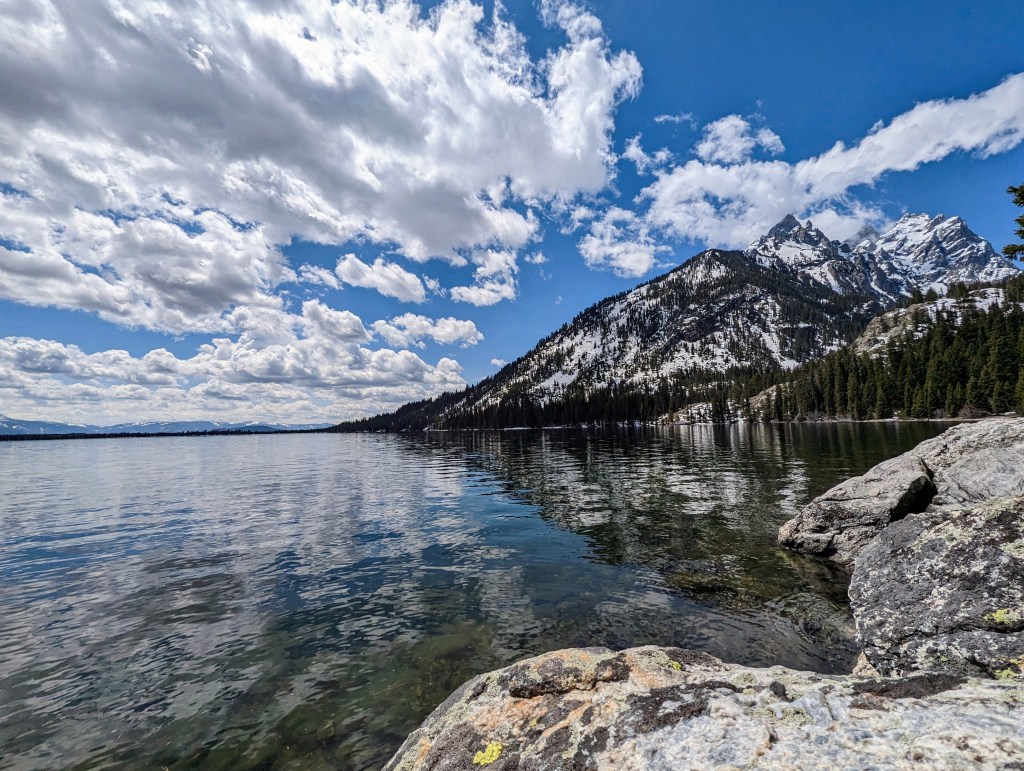
Light came slowly into the valley. Dawn revealed a breaking camp, as tents and sleeping bags disappeared into the back of an old SUV. Once their task was done, the campers piled into the vehicle and cranked the engine to life. Movement was tentative as first, bone jarringly slow on a rutted washboard track. Eventually the dusty machine turned onto a highway and reached Jackson, where it pulled into a café parking lot.
“Stoa Poikilê” was painted on a sign.
“What does that mean?”
“I think it is Greek for “Painted Porch.” A friend told me this is the best place in town for grub.”
The group appeared half asleep as they emptied from the vehicle. There were two couples; Sene and Zeno – the first pair, were in a conversation. Epicte and Marcus followed in silence. All were in a booth soon enough, but someone watching their progress might have noticed Epicte walking with a slight limp.
Sene was talking. “Let us pick two lovers on the trail Zeno. We shall shadow them up to the lake, and observe what we can of their interactions. Upon our return let us discuss what we have learned about romantic love from their example. Can you think of a better way to spend this day? Epicte and Marcus – are you in?”
Epicte grinned and nodded, as she warmed her hands around a mug. Marcus raised one eyelid and let out a sigh. “Sene, let us have a bit of this coffee before you toss up such an idea.”
After a moment, Zeno spoke. “I think it is splendid. Let us choose however not one but three couples – to represent the beginning, middle, and end of love. Then I would very much like to hear your thoughts dear Sene.”
——————–
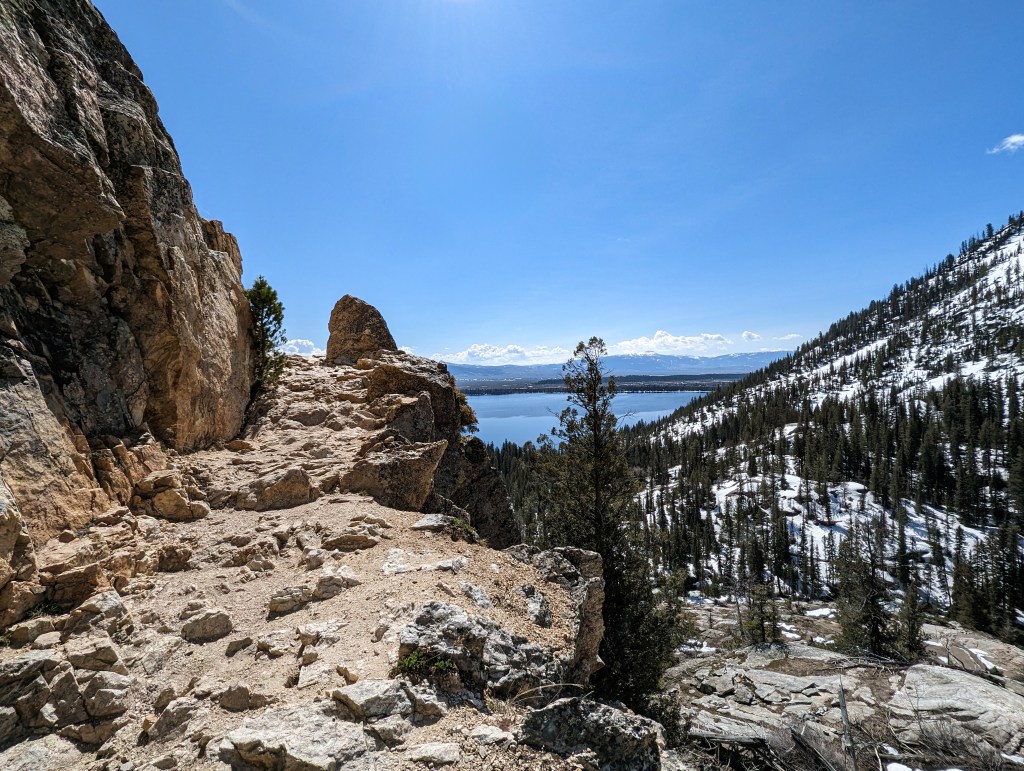
Amphitheater Lake
After breakfast the foursome drove to Lupine Meadows. Here at the trailhead they lingered to study the hikers setting out, finally falling in behind a young pair of lovers. These were sufficiently fit, but not too fit that they would leave the elders behind, and had pleasant demeanors suggesting they might share more than a few words if prompted in conversation.
Dialogue was initially sparse as everyone strove to make strides with fresh legs in the crisp morning air. Finally some rocks with a view provided an opportunity to rest.
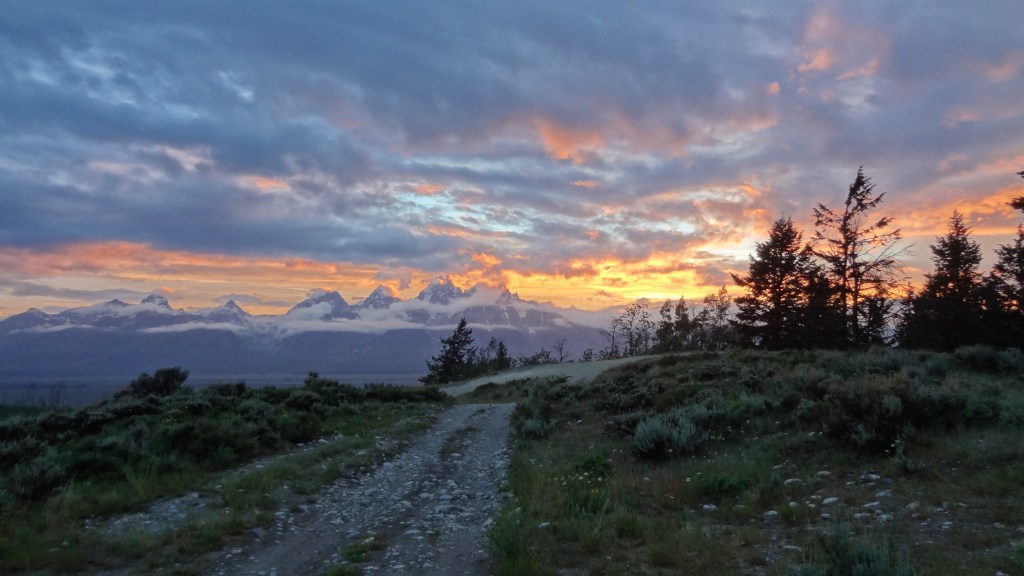
The young girl looked over the valley to the northeast. “Can we see Colter Bay from here? Our tent is there someplace. That must be Bridger-Teton National Forest.”
Marcus joined their survey of the terrain. “Yes, there is Gravel Mountain – just through the haze, in Bridger-Teton. It is harder to make out the bay, on the other side of Jackson Lake.”
“Have you heard of the first trappers in the valley?” he continued.
The girl looked back at him with interest.
“John Colter came through here early on, after he had left the Lewis and Clark expedition. Later Jim Bridger and Davey Jackson wandered in. So we have been given the names of Colter Bay, Bridger-Teton Forest and Jackson Lake. ¹
Epicte took up the conversation. “This propensity to name geographical features after people may give one pause to ponder what each of us will leave behind. What will be our legacies?”
“The exploits of these explorers are still relatively contemporary, yet we know their characters by reputation only. Like them, all who actually knew them are gone.”
She paused, and when there was no reply continued.
“Those who remember us will themselves pass. In the big picture the rumor of all shall enter oblivion. Even these mountains and valley will erode to nothing.”

The group continued up the path. As they hiked, Sene watched the young lovers. She felt a pang of nostalgia, fondly recalling her first hikes with Zeno. Those days seemed like yesterday but it was long ago. She was grateful to have had him in her life all these years.
She scribbled notes with a stubby pencil on a small pad. By the time the group reached Amphitheater Lake she had recorded many observances of their two subjects – very much in love. Here at the terminus of the day’s hike, the foursome bid farewell to the young paramours.
Marcus and Epicte spotted a middle-aged couple sitting on rocks by the lake – potentially their next unknowing study participants. They approached them, followed by their friends.
“Hello, mind if we join you?”
The new pair were relaxing in silence, but both nodded.
Epicte noted the rings on their fingers. “How long have you been married?”
“Oh, it is five years now.”
“Nice.”
The group ate lunch in the company of this new duo. Sene’s notepad began to describe a pair whose initial attraction had settled into a friendship.
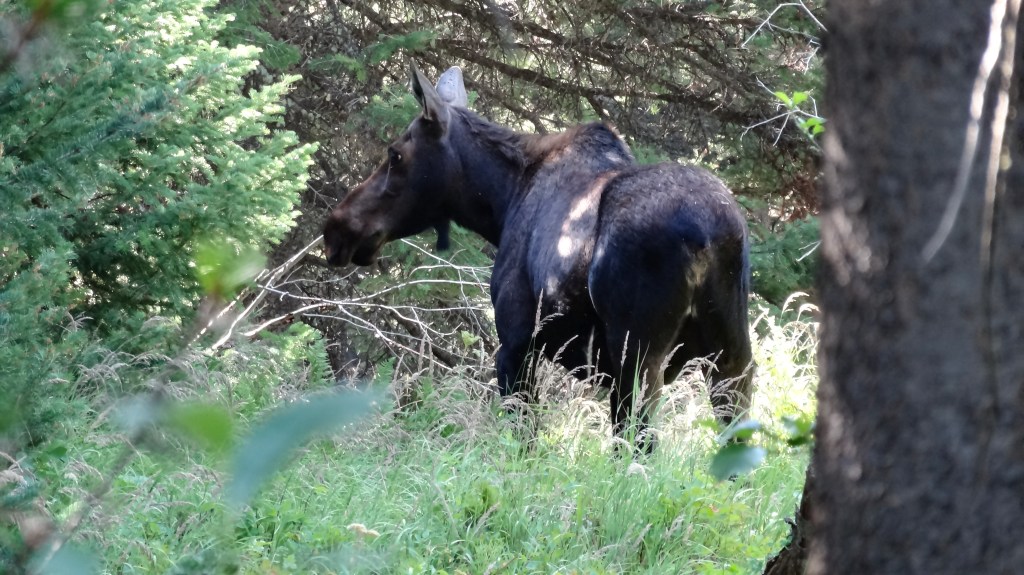
In a quiet interlude, Marcus spoke. “Imagine this valley when it belonged to the bear and moose. Have you heard the story of John Colter?”
“Vaguely – I know there parts around here are named after him. Who was he?”
“Colter was already a seasoned explorer by the time he joined the Lewis and Clark expedition. He is often credited with saving those adventurers due to his survival savvy. After the expedition returned home, Colter roamed Montana and Wyoming, including through the valley below. His reports of nearby geysers and bubbling steam pools were first met with derision, such that Yellowstone was originally referred to as “Colter’s Hell.”²
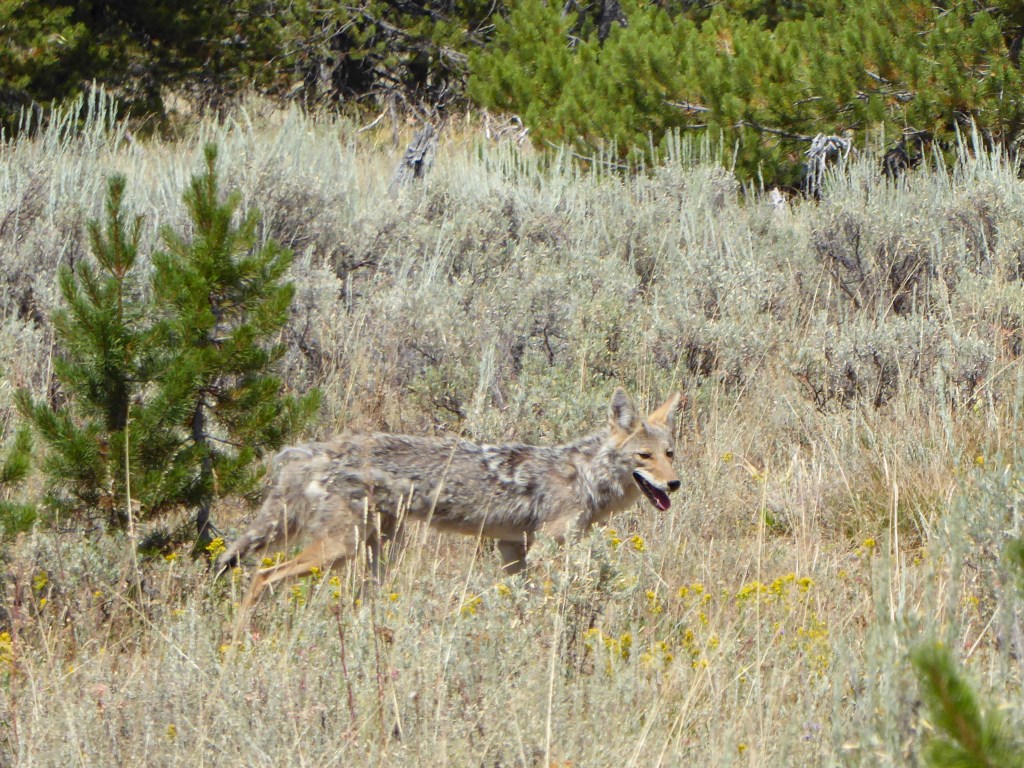
“John is also famous for an encounter with a Blackfoot tribe. After being captured, they set him loose to be hunted for sport. He was able to escape and trek 300 miles back to an outpost.”
“I often wonder how the man kept up his spirits during his often solitary and hazardous wanderings.”
Epicte mused, “It is said that there are two kinds of agencies affecting our state of mind – things within and things beyond our power.” ³
“For example, Colter might have accepted falling captive as beyond his control. He could have let go of despair and focused on taking action – by running and fighting. Perhaps this is how he coped.”
The conversation returned to the present. The married couple revealed how they had settled into their lives together. To prevent becoming codependent they kept separate friends and hobbies.
After lunch the quartet bid goodbye to these two, who had more than adequately provided a model for the middle phase of a romantic relationship.
Zeno had meanwhile spied another pair of hikers preparing to head down the mountain. He had been waiting for such as these, for their faces displayed dour expressions. He timed his pace so that the four elders would fall in directly behind this new pair where the trail left the lake.
As they approached they could hear the two bickering. Their conversation stopped as Zeno drew close.
“Hello!”
“You can go ahead.”
“Oh. Perhaps we will just tag along behind you. Our friend has an old leg injury and she is probably going to slow down on the steep grades. This way you can pull ahead if needed, without having to pass us.”
The six hiked for a while in silence. Finally there was a chance to rest at a switchback. Deadman’s Bar was visible in the distance – where several prospectors had met their end in a bygone era.
Marcus pointed at a gentle curve in the Snake River. “Deadman’s Bar is over yonder, part of the fabric of Les Trois Tetons’ history.”
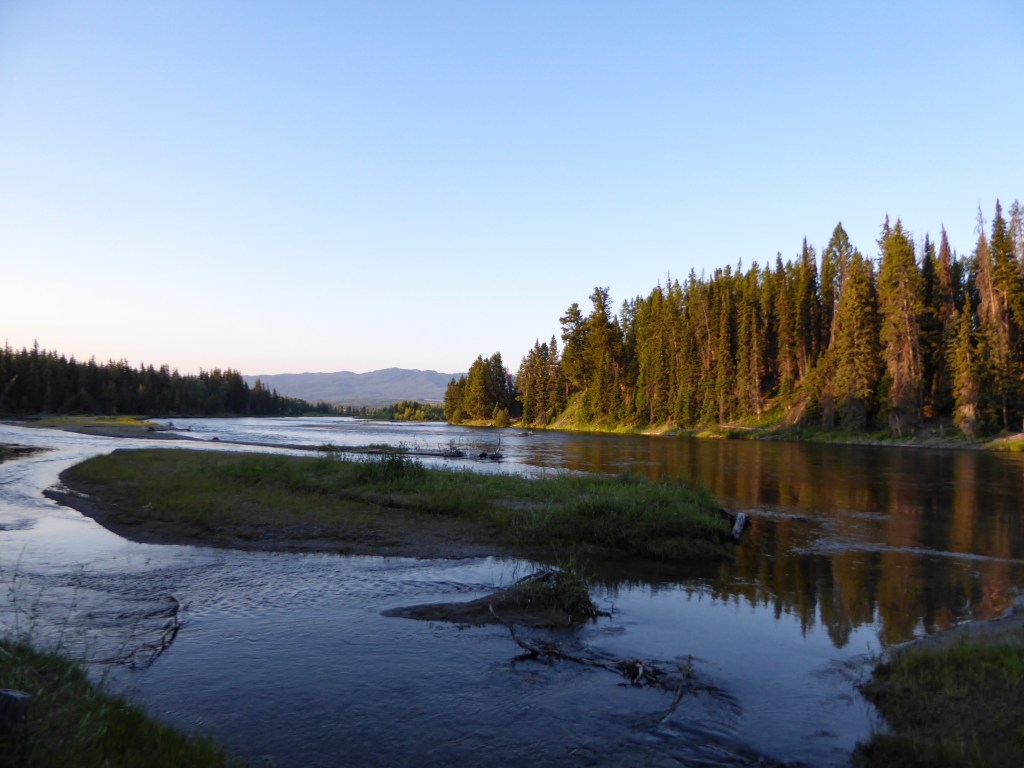
“The tale starts in Montana. Three partners convinced a fourth man to front their prospecting expenses and they all journeyed to that sand bar. When the claim did not produce immediate success, the first three began to abuse the last one. Perhaps they wished him to abandon the claim with no repayment of their loan. As a bonus, if they did eventually find gold, there would be one less share to split.” ⁴
“The abuse reached such an extent that the latter killed the former while they slept. The bodies were dumped into the adjacent water.”
Zeno picked up the conversation. “Greed, lust, and romantic longing are all desires, engendered from wanting something we don’t have.”
“There are two ways to diminish the unhappiness of unfulfilled desire. One, is to attain what we lack; but that is often a fleeting satisfaction. Once we have something, we no longer desire it to the same extent and set our sights on something else.”
“The alternative is to stop craving the object of our affection. Our neighbor Epicuria says “happiness is wanting what we already have.”
“In romantic love it is the same. For even the most beautiful partner loses luster in the dim light of familiarity. The greatest partnerships come to resemble friendship. The craving for our partner is replaced with a joy of companionship – at this point we want what we already have.”
“But if a way to such amity is not found, one or the other may finally decide the partnership must be dissolved. It can end in acrimony. But it can also end well, if both are grateful for their shared experience. When it is time for us to part – to do so with grace becomes our goal.”
The couple looked at each other with a softness which seemed genuine. But Zeno thought the die had already been cast. Even so, if they were aware of the dynamic perhaps they could make the break with gratitude.
Few words were spoken the rest of the way to the parking lot. The foursome took the SUV back to the café.
——————–
Back at Café Stoa Poikilê
Seated at the same table from the morning, Sene started reading from her notes.
“In love’s beginning, we “fall” because our minds are swept along with our hearts. We choose to love, and our desire hides the discordances.”
“In love’s middle, the initial attraction subsides, and we are left with the familiar, a habit of another’s presence. It is here where feelings will thrive or perish – love is now a verb. Much of the course is within our influence – if we nurture the relationship, it continues to grow and sustain itself.”
Marcus replied, “I shall show you a love potion without drug, herb, or incantation – if you want to be loved, love. To stay in love, we must do the work.”
Epicte turned toward him. “But partnerships must all end eventually. We know that everything is perishable, and that it is not possible for one human to always be with another.”
She continued, “Our partner has been given to us for the present – not for all time, but as a temporary treasure that comes to us at the appointed season. We must not wish for a fig in the winter.”
Marcus added, “Accept the things which fate binds to us, and love those whom fate brings. The practicality of this is not to hold onto anger at our partner when we have them, or linger long in grief after they are gone.”
There was a moment of silence. Each seemed to be reflecting on past relationships.
Sene looked at her notes of the trail’s last couple. “At love’s end, one leaves. – in the case of a breakup, the decoupling is a decision. The relationship doesn’t meet one’s needs, so there is a pulling away.
“We suffer more in imagination than in reality,” she concluded. “For a relationship which carreens toward a breakup, perceived ills or mistreatments weigh on us more than they did before, simply because we have stopped communicating or our partner has stopped hearing us.”
The waitress came to refill Epicte’s coffee cup. Her name tag said, “Musonia.” With a smile she spoke. “I’ve been listening to y’all. I can say from experience, that staying with someone where love has departed is worse than loneliness.”
Marcus nodded. “No one knows us better than our mates; It is our role to keep that authenticity. When we begin to hide our true selves, we begin to walk away – and that path can be lonely.”
At a nearby table two people sat in contemplation. At least one had been lending an ear to the adjacent conversation. “Chrys, have you been listening?”
“Yes Clea.” He gazed out the window with a searching look. Presently he continued.
“The anchovies from the sea around my hometown are despised there, on account of their abundance. But in other cities, they are prized above all others.”
“The familiar we disdain, the exotic we desire. So it is also with romance. Only by understanding this notion may we rise above it, and cherish that which we already have.”
Over at the bar another couple had also been following the dialogue. Cato spoke up next. “For some there is no comfort without pain. We obtain salvation through suffering. Hence why we sometimes choose mates whom we know are not right for ourselves.”
His companion Dia added, “It is a false love that will make us something we are not. We may hide our true nature from our partner, afraid of being unloved should they truly know us.”
Zeno smiled. He had been unaware that their discussion captivated so many of the others in the café. “Yes – vulnerability, or showing our true selves, is a precursor to all that follows.”
Sene glanced around at the other patrons. Satisfied they were done speaking for now, she continued. “Another way a coupleship may end is by passing.” She recalled her father trying to make sense of things after her mother had died.
“Every new beginning comes from some other beginning’s end,” she continued. “Joy comes from those whom we have loved even when they are absent.”
“Our eventual duty is not to grieve what has been taken from us, but to be thankful for what has been given,” Marcus reflected.
Outside a car horn honked, and Zeno realized they should be on their way.
He spoke, in a quiet tone – almost to himself. “Perhaps there is a fourth phase of romance – the beginning, middle, end – and a reprise of sorts. What happens after love? A yearning for what once was. The comfort of familiarity, a nostalgia even acknowledging it didn’t work or that we can’t go back to it.”
The foursome settled their bill and stood up to leave. As they exited into the parking lot, Sene looked up at the café’s sign. “I like this place. We must come back again.”
Zeno replied. “Very well my dear Sene. But you must suggest another challenge for us.”
——————–
The Painted Porch © 2023-2025 by Dean Jen
¹ Merlin K. Potts, “The Mountain Men in Jackson Hole,” Grand Teton Natural History Association, Moose WY, 1960.
² Merlin K. Potts, “John Colter, the Discovery of Jackson Hole and the Yellowstone,” Grand Teton Natural History Association, Moose WY, 1960.
³ Arrian, “Enchiridion of Epictetus,” Public Domain, 125 CE.
⁴ Fritiof Fryxell, “The Story of Deadman’s Bar,” Grand Teton Natural History Association, Moose WY, 1960.



 Dean Jen
Leave a comment