“The question is not what you look at, but what you see.” ¹
A Fish
A student waited in the lecture room. Eventually a master arrived. The preceptor reached for a shelf and extracted a preserved creature from a jar. He placed it on the table, along with pencil and paper.
“Examine this fish, and be prepared to tell me what you discover.”
As the morning progressed the student became restless. She wrote some notes on the paper, but bereft of other ideas she began to sketch the fish. In the process, details emerged which had escaped her initial cursory inspection – a sheen on scales, a structure of fins, a lid-lessness of eyes. In fact she came to know the fish’s physical manifestation in a way which surprised her.
The student thus began to understand the skill of observation, which was the object of the exercise. Teaching that day was Louis Agassiz, who famously said, “a pencil is the best of eyes.” ² The act of noticing detail, in order to draw it, renders a subject more intricately in the mind.

An Ocean of Sand and Rock
Conrad remembered the story of Agassiz’s fish as he walked. He was not prone to sketching, but today there would be much that might be missed, if he was not adept at visual appraisal. He was hiking in the Texas panhandle, deep into Palo Duro Canyon shortly after sunrise. The ravine is 120 miles long and 20 miles wide, with walls exposing 250 million years of geology.
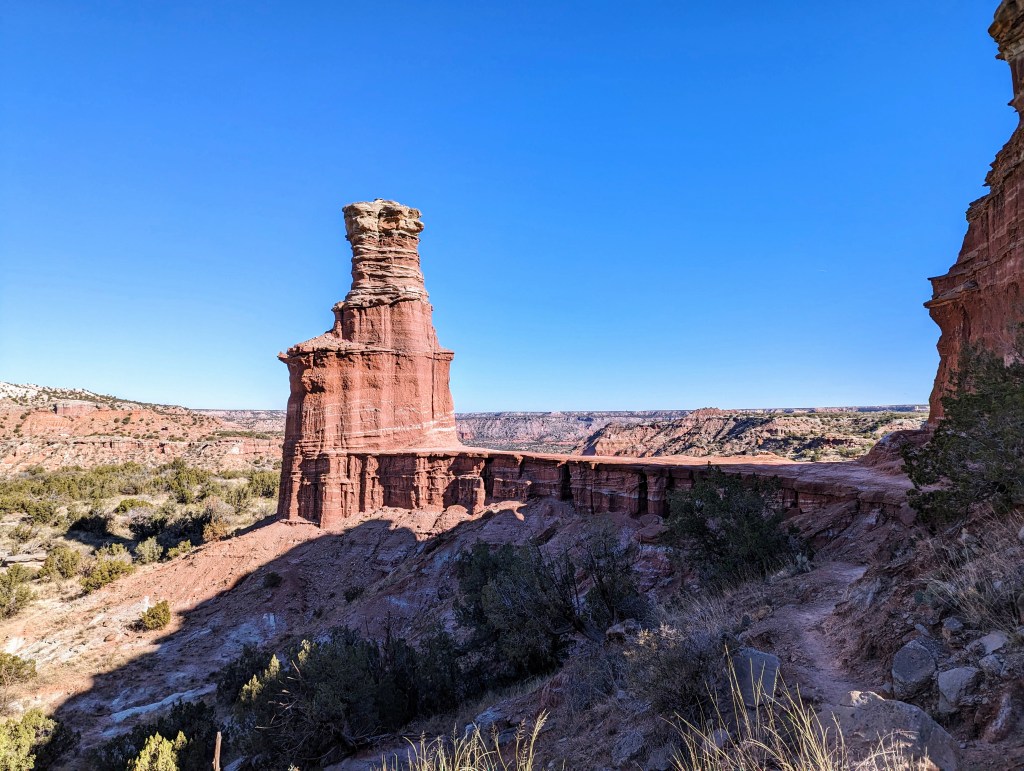
His goal was the lighthouse, a sandstone column rising from the canyon floor for which the trail was named.
Of course it was not a real lighthouse – but rather a stone pillar reminiscent of one. And yet Conrad could not shake the idea that it was a beacon today, at least for him. Why might a pharos be here in the middle of the Texas plain, far from the sea? He supposed such a structure would normally ward us from shoals, or beckon toward a safe harbor.
Its purpose might be personal, he decided – maybe to remind him of the lighthouse keeper in Lovecraft’s “the White Ship.” In that story, a boy grew into a man with dreams of sailing into a future full of amazing places and magical happenings. But after years of tending the lamp, the aging keeper realized fate had passed him by. The passing boats which sailed to exotic locales would not be stopping for him. The crushing of aspirations left him dreamless thereafter. ³
Perhaps Conrad’s destiny would be kinder, for he still dreamed.
A Shark of the Desert
As the man moved along the trail a pair of eyes on the mesa followed his progress. The orbs betrayed a hunger – for she who peered from them was famished, her last meal several days past. As she tread along the rocks, lean muscles moved in silent precision but a gauntness in ribs betrayed a diminished state. Age had taken her agility and speed; only grace remained – but grace hadn’t been enough to catch the javelina yesterday.
The feline had a sense of self – but as a mostly solitary creature she had no use of a name. Literary tradition might suggest she is Sabor, the (mountain) lioness. ⁴
Sabor smelled then heard the hiker, before laying eyes on him. Her mother taught her to fear humans – one of her earliest memories was slinking away from them. She wondered now if she might take down this prey. It was worth considering – she would follow him for a spell.
The Watchtower
On the path Conrad stopped to take a sip of water, noticing a grain pattern on the rock face. He wondered how many more times his eyes would regard the sedimentary deposits of an ancient Texas sea. Age imparted a certain resignation into his musings this morning – the march of seasons had left more years behind than ahead. He thought of Anais Nin’s conclusion, “we do not see things as they are, but as we are.” ⁵ Could Anais have read Henry David Thoreau or Simone Weil?
Thoreau wrote that we often see only what we are looking for – our scrutiny is filtered by expectation. Simone Weil might have agreed – she suggested true understanding is achieved only by first emptying the mind of preconceptions.
Conrad thought of an ex-girlfriend. She wanted to be seen for who she was but he saw her through his own lens. He hadn’t yet been capable of comprehending her true being.
They would go to a couple’s therapist where he would sit erect in rapt attention as his ex talked. But it was a muscular effort only. Despite his intention to be a good listener he hadn’t emptied his mind and so heard only what he allowed himself. It wasn’t until after she was gone that he began to perceive her authentically – as if distance and time finally stripped away his predispositions to see her as she was.
That was long ago. Today he was alone on the trail, and had only nature with which to practice observation. Conrad supposed Thoreau and Weil would have wanted him to see the canyon in its naked splendor. He would yield to their advice.
Perception to Thoreau was a matter of presence – lingering on the subject with a forthright propinquity. He postulated that “wisdom does not inspect, but behold. We must look a long time before we can see.” ⁶ Like Weil, he wrote that losing bias is a precursor to successful scrutiny: “Objects are concealed from our view, not because they are out of our [vision but] because we do not bring our minds and eyes to bear on them…The supply answers to the demand … we cannot see anything until we are possessed with the idea of it, and then we can hardly see anything else… A person sees only what concerns them.” ⁷
Simone Weil developed her ideas in the century after Thoreau. To her, “we have to cure our faults by attention and not by will.” ⁸ Weil supposed that attention is a negative activity – a clearing of ruminations to regard something as if for the first time; requiring us to “stand still rather than lean in.” ⁹
“Attention is an effort, the greatest of all efforts perhaps, [consisting] of suspending our thought, leaving it detached, empty, and ready to be penetrated by the object… Above all our thoughts should be empty, waiting, not seeking anything, but ready to receive in its naked truth the object that is to penetrate it…We do not obtain the most precious gifts by going in search of them but by waiting for them.” ¹⁰
Conrad would attempt to apply these ideas today. He would clear his mind, and then survey the canyon with attentive presence. Glancing ahead he looked for a glimpse of the lighthouse, but realized that this was coloring his view – by searching for a specific thing, he might render all else invisible by inconsequence.
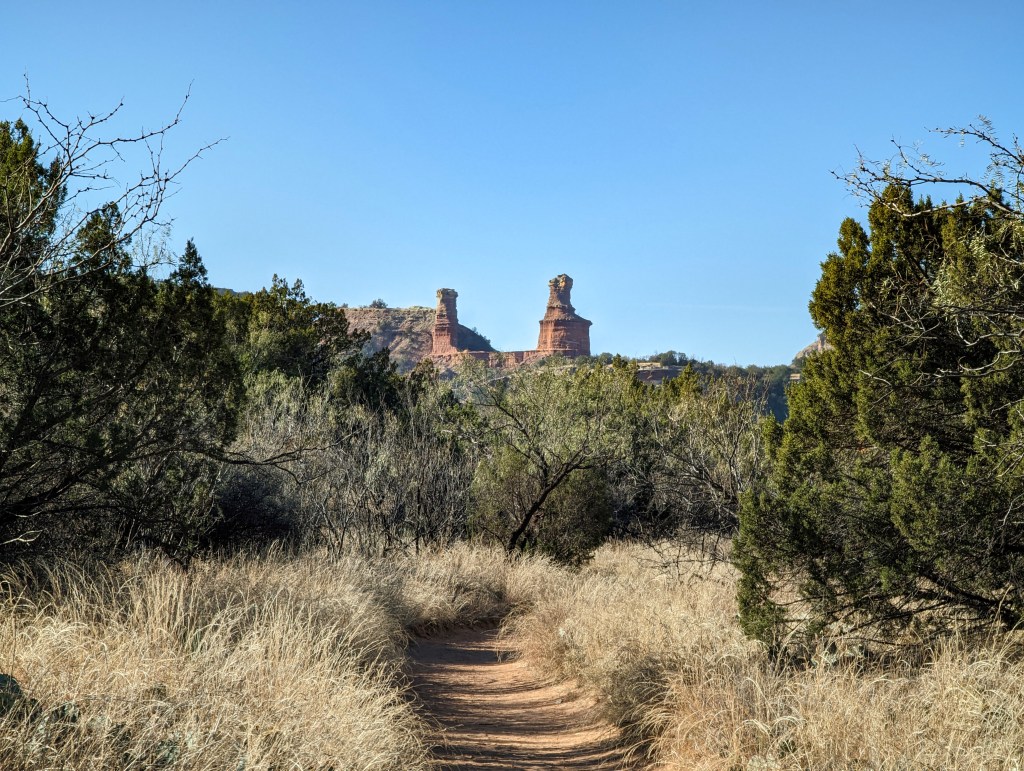
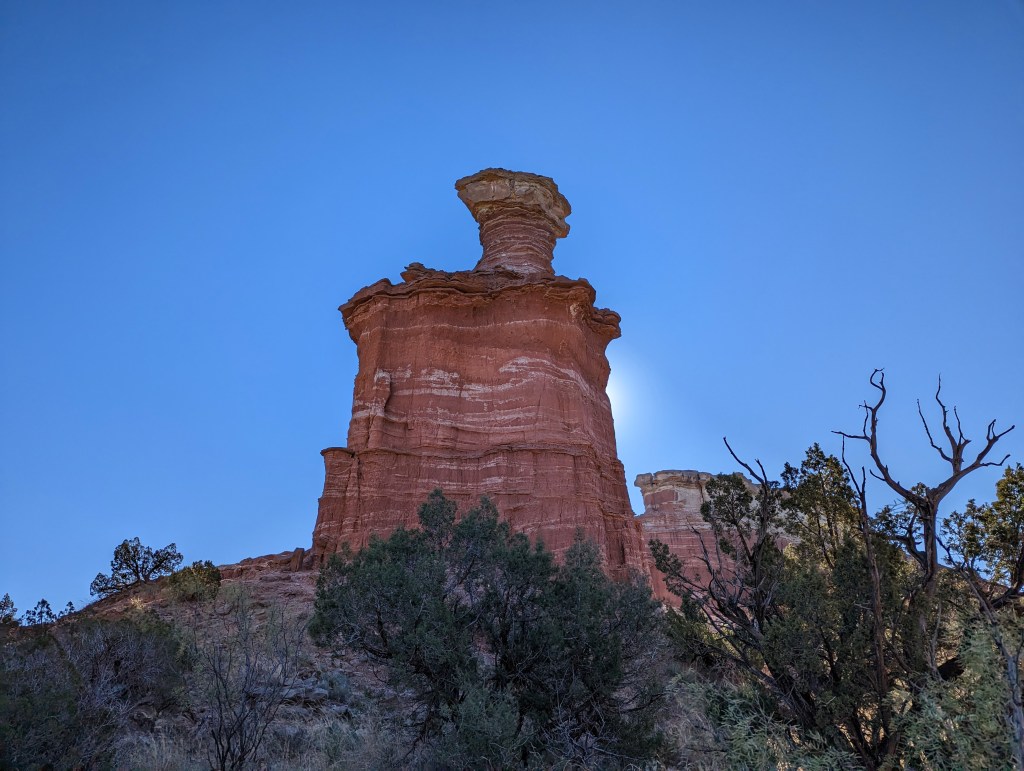
Eyes soaked up the scenery that drifted by as he trekked. Eventually the faux watchtower came into view. Conrad approached and reposed in its shade; his quiet solitude was complete.
Reflections of this journey came to mind. Ralph Waldo Emerson (a neighbor of Thoreau) wrote that wanderlust is a fool’s paradise. “The soul is no traveler; the wise person stays at home.” ¹¹ Similarly Seneca and Marcus Aurelius admonished against going away to leave our problems behind, and Epictetus counseled to find beauty near, in lieu of seeking it afar. ¹²
But Conrad decided to disagree with these Stoic luminaries. Travel allows us to experience ourselves in a different setting, revealing something of our character obscured by a sameness of routine or dullness of habit.
After a while he turned to retrace his steps back to the trailhead.

Tacking Home
Sabor was waiting patiently, for she knew the human would return via the same path – the canyon was impassable beyond. She had come down from the mesa by silently weaving between the mesquite and hackberry, stopping between some boulders to survey the man on the trail below. She was in sight of the hiker as he approached – but partially screened behind a pair of yuccas.
Below her Conrad paused to scan the terrain. The sun was lower now so shadows were longer and colors not so washed out. The orange and red of the escarpments were vibrant. For a moment it seemed that he looked directly at Sabor – who sat motionless staring back at him – before the man’s eyes moved unknowingly away and continued their examination across the gorge.
The saunterer finished his survey and glanced at his watch. Soon he would be back at the car. He moved off at a slow pace, entertaining a thought that Henry and Simone would have approved of his visual acuity today.
As the hiker continued up the path he grew smaller in the distance. Sabor sniffed the air and detected the unmistakable scent of a deer. Here was a prey she knew. She would leave the man alone. With a pang of hunger she sprang up and turned into the wind to track her new quarry, darting quickly out of sight up a spur ravine.
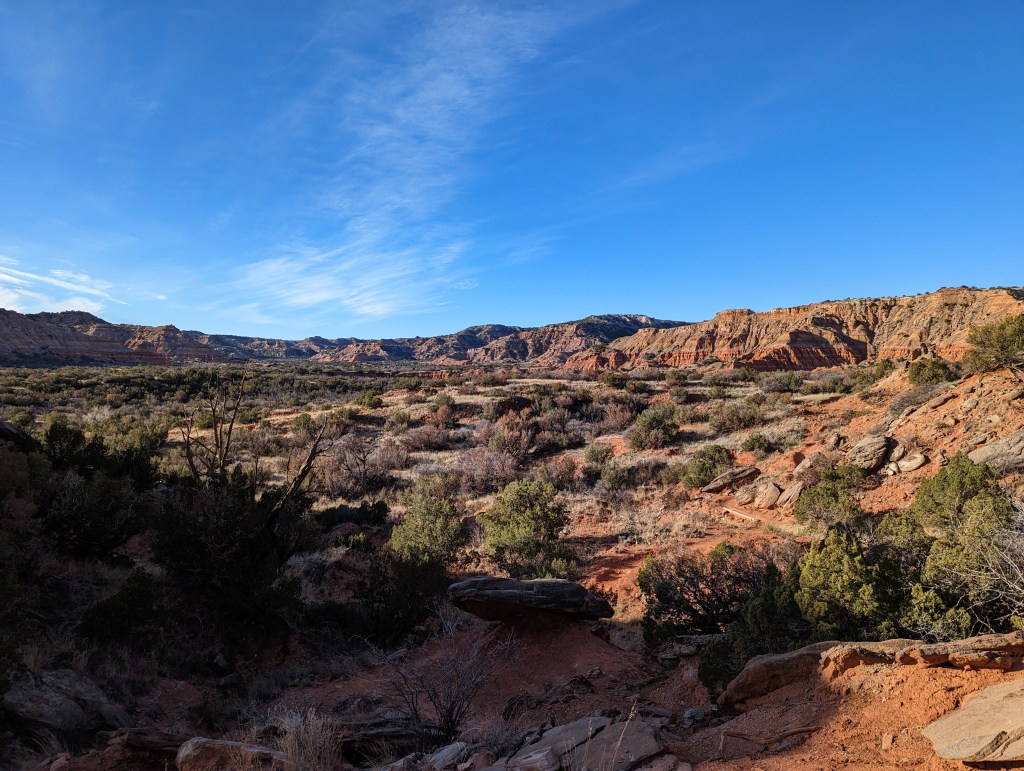
Conrad meanwhile followed the trail’s meandering course across gentle switchbacks. At a slight rise, he took a last look down the canyon in the direction of the lighthouse, now unseen. Our goals are beacons, he thought – waypoints, not final destinations. Like a lighthouse they can only point us on our way. The safe harbor in the end is the one we started from, which we leave in order to return; exploring our world – perhaps with presence, and even attention – so that we may find our way back, different from when we left.
The wanderer wondered if the lighthouses on our journeys of self-discovery guide us back to the safe haven of our own hearts. He decided it was so.
————————-
“We shall not cease from exploration
And the end of all our exploring
Will be to arrive where we started
And know the place for the first time.” 13
“The only true voyage of discovery… would be not to visit strange lands but to possess [new] eyes.” 14
————————-
The Lighthouse copyright 2023-2025 by Dean Jen
————————-
¹ Henry David Thoreau, “Journal Vol. 2,” Bradford Torrey, 1851.
² Andreas Teuber, “The freedom of Thought…” Et Cetera… Brandeis University, 2001.
³ H.P. Lovecraft, “The White Ship,” The United Amateur, 1919.
⁴ Edgar Rice Burroughs, “Tarzan of the Apes,” A.C. McClurg, 1912.
⁵ Anais Nin, “Seduction of the Minotaur,” Swallow Press, 1961.
⁶ Henry David Thoreau, “The Natural History of Massachusetts,” Houghton Mifflin, 1906.
⁷ Henry David Thoreau, “Autumnal Tints,” The Atlantic Monthly, 1862.
⁸ Simone Weil, “Attente de Dieu,” La Columbe, 1950.
⁹ Robert Zaretsky, “Simone Weil’s Radical Conception of Attention,” Literary Hub, 2021.
¹⁰ Simone Weil, “Grace and Gravity,” Plon, Paris, 1947.
¹¹ Ralph Waldo Emerson, “Self Reliance,” James Monroe, Boston, 1841.
¹² Christopher Porzenheim, “Wanderlust Keeps Us From..,” Front Porch Republic, 2019.
13 T.S. Eliot, “Four Quarters,” Harcourt, 1943.
14 Marcel Proust, “The Prisoner,” Gallimard, Paris, 1923.


 Dean Jen
Leave a comment