
“Have you read Proust?”
The woman sitting in the corner of the bar had been quiet long enough that I had forgotten her. My surprise on hearing her words at first veiled the question.
I peered into the dimness whence the voice had come. She reminded me of myself, but older. Answering the query would engage my attention; it was not a conversation that could end without a proper reckoning. But Proust was as good a topic as could be found tonight – at least in English, in a nearly empty Sardinian bar. So I took a breath and replied.
“Proust wrote that the loss of a lover not only reminds us of our feelings, but also creates them. When we are with someone they become a habit. Gratitude is forsaken and irritations accumulate. In time we convince ourselves that life would be fine without them, and lapse into behavior which drives them away. Essentially, we act unloving.”
The woman was staring into her glass. When I paused she looked up and smiled weakly, but said nothing – so I continued.
“When our partner is gone, an awareness comes of how much they meant to us. Paradoxically we then create the love that was lost when they were constantly around.”
“Proust wrote a long time ago, but his wisdom has been forgotten. Now we chastise our former lovers for discarding us and then wanting us back. And yet perhaps it was only our absence which endowed the clarity they lacked when we were around them.”
My newfound acquaintance replied. “Yes – Proust suggests that familiarity dulls our senses and prevents an appreciation of the things that matter. He knew with certainty that his love for Albertine had languished – but it was a false knowledge. Upon hearing of her death, he understood that the logic of his mind had betrayed the truth of his heart.” ¹
We sat together in silence for a while, each savoring the company of a kindred soul. Eventually she took a long sip of wine and continued. “Barthes wrote that to say “I love you” is a demand – conveying an obligation of the receiver to respond.” ²
“My lover first said those words to me. What could I do with them, once they had been uttered? Not knowing my heart, I murmured the words back to him. But my mind was not convinced. Perhaps I could do better. And that thought sabotaged our relationship. Every imperfection became an irritation, when they could have been endearments.”
“One day he was gone. He fell out of love very slowly and then all at once.”
Someone could have walked over then to find us teary-eyed.
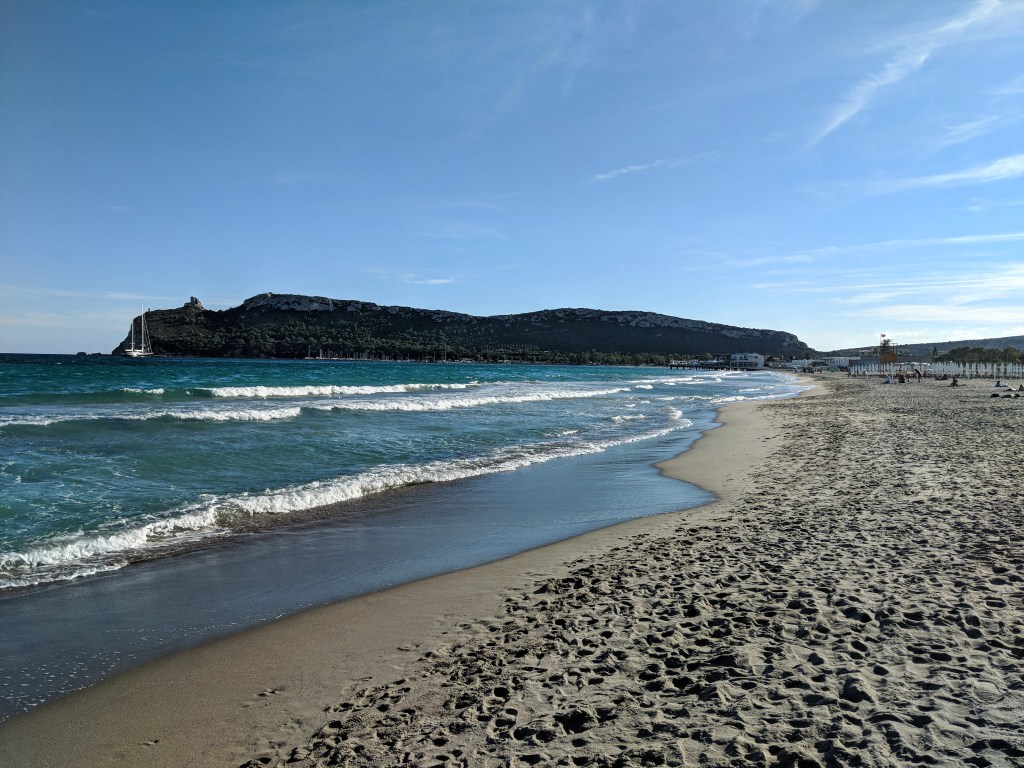
A remembered passage might console her. “You were swimming in the sea. You didn’t know, as Nussbaum observed. In love, we do not yet have full knowledge of the emotion. We do not appreciate the vast beauty of the ocean until we leave the water and look back from the beach.” 3
“So we act unloving, and push away our partners. Later we sit in a dark tavern and console ourselves. But it is through loss that we do better next time. We will act lovingly, in spite of the annoyances.”
Standing up, her hand found my shoulder. “Perhaps you are right. Maybe it is so. With that my friend, I take your leave. Thank you.”
My eyes followed as she walked down the lounge and disappeared around a corner.
I hoped she would swim in the ocean once more.
A bartender came over and gestured at my empty glass. “Più vino, signora?” Then more hesitantly – “Did I notice you talking to yourself?”
“Not usually my thing. I was considering what to say to a younger me, had we met tonight. But that would be a fool’s errand. The past is over. What is important is what we bring to the future. I wanted to remind my future self of something.”
“An interesting discussion?”
“I came to Cagliari with a boyfriend once – years ago we sat at this bar. But love is a verb. A relationship requires constant action to keep it alive.”
“Ah, one of those conversations. How did it go?”
“Have you read Proust?”
—————–
Cagliari © 2021-2025 by Dean Jen
1 Marcel Proust, “La Prisonnière & La Fugitive”, Grasset and Gallimard, 1923 & 1925.
2 Roland Barthes, “Roland Barthes…,” Farrar, Straus and Giroux, 1977.
3 Martha Nussbaum, “Love’s Knowledge,” Oxford University Press, 1990.



 Dean Jen
Leave a comment